Releasing what we cannot control—and reclaiming our power.
Sometimes the most powerful decision we can make is to stop. Stop the struggle. Stop the fight. Stop the tangle of endless activity that leads nowhere.
We are taught to persist. To persevere. To fight for what matters and never give up. But there comes a point when holding on is no longer an expression of strength.
It becomes self-imprisonment.
We can pour enormous energy into trying to rewrite the past, change another person, resist the realities of an aging body, or control an outcome that was never ours to control.
Eventually, we must ask: Is this struggle moving me forward—or is it costing me my peace, my energy, and my freedom?
Some battles are not won by fighting harder.
They are won by laying down what was never ours to carry, control, correct, or conquer.
Enter radical surrender.
Radical surrender is the conscious decision to release our demand that life be different from what it is. It does not mean we stop caring, acting, or working to improve our circumstances. It means we stop spending our energy resisting reality.
Surrender may not change what happened, but it can change our relationship to what happened.
And that can change what happens next.
Radical surrender does not require us to excuse harmful behavior, abandon our values, or tolerate mistreatment. It asks us to face reality as it is.
There is an enormous difference between saying:
“I refuse to accept that this is happening.”
and saying:
“This is happening. Now, how do I want to meet it?”
The first keeps us locked in an argument with reality. The second brings us into the present—the only place where we can exercise choice and reclaim our power.
Radical surrender clears the ground for wiser choices—choices that begin with what is true now and lead toward what can still be changed, healed, created, or discovered.
If I am ill, surrender says, “This is where my body is today.” From here, I can decide what care it needs.
If a relationship has changed, surrender says, “This is not what I hoped it would be.” Then I can choose whether to redefine it, establish new boundaries, or leave it.
If someone has treated me badly, I can accept that it happened without pretending it was acceptable.
Acceptance tells the truth about where we are. Choice determines where we go next.
That is power redirected.
Releasing the Inner Struggle
Sometimes the external battle is over, but we continue fighting it within ourselves:
It should have happened differently.
He should understand.
She should apologize.
They should recognize what I did.
My body should still be able to do what it once did.
My life should have followed the plan I made for it.
These thoughts are deeply human. But sometimes what we must surrender is not the situation itself. It is our attachment to how things were—or how we believe they should have been.
When we hold on to a long-ended relationship, the body of our younger years, or the life we imagined would unfold differently, we remain tethered to a past we cannot change.
The present is where we have the power to create something new.
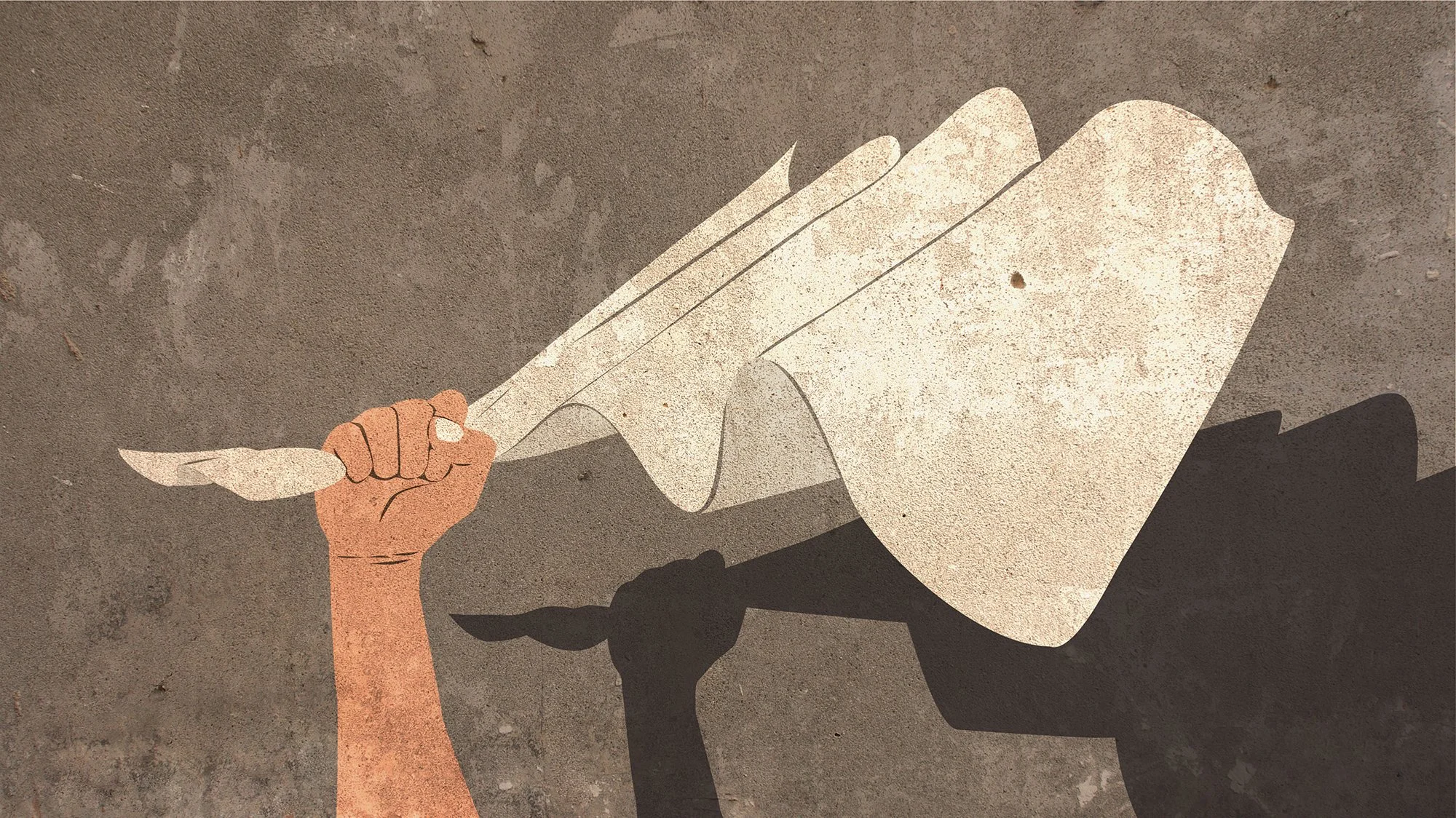
We can still speak up, negotiate, pray, plan, heal, create, and persevere. We can work wholeheartedly toward what we hope will happen while learning to hold the outcome with an open hand rather than a clenched fist.
There is freedom in saying: “This is what I hope for. This is what I will work toward. But my peace does not depend upon forcing life to give me exactly this result.”
Surrendering an Outgrown Identity
Sometimes we are not holding onto circumstances. We are holding onto an old definition of ourselves:
I am the strong one.
I am the caregiver.
I am the peacemaker.
I am the person everyone depends upon.
I am the one who never needs help.
An identity that once gave us purpose can eventually become a limitation. We may spend tremendous energy preserving a version of ourselves that once served us but no longer allows us to grow.
Surrender is not always about leaving something behind.
It can be about making room.
Room for a different role. A healthier relationship. A new understanding of strength. A possibility we could not see while we were struggling to preserve what had been.
Radical surrender says: “I will stop fighting what I cannot change so I have more energy for what I can. How I meet this moment belongs to me.”
This is where our real power lies:
The power to choose our response.
The power to establish our boundaries.
The power to change direction.
The power to begin again.
The power to decide what we will carry forward—and what we will finally put down.
We surrender the illusion of complete control so that we can recover something far more valuable: the freedom to decide who we will be in the presence of what we cannot control.
Sometimes we must release the battle to strengthen the hero.
Sometimes we must stop demanding that life return what used to be before we can recognize what might still be.
And sometimes, when we finally open the hand clenched around the past, we discover that surrender has not emptied it.
It has freed it.
To create. To choose. To embrace what is before us now. To reach toward what is still possible.
Radical surrender is not the moment we give up our power.
It is the moment we stop giving our power to what we cannot control.
We stop fighting what is, reclaim the energy we have spent resisting it, and turn that power toward what can still become.